AVOTIGERTOUCH2
AVOLITES
discontinued

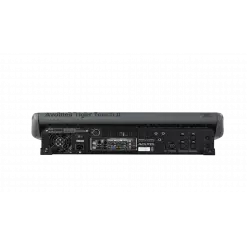
Tiger Touch II

ORDER CODE: AVOTIGERTOUCH2

Now boasting a 100% brighter screen, increased processing power, and faster graphics engine, the Tiger Touch II is the most specified Titan console.
The Avolites Tiger Touch II represents the perfect combination of power and portability. This third-generation console is packed with enough power for complex shows, yet small and light enough to fly in standard hold luggage. The console features SMPTE timecode support and a redesigned button layout to match the entire Titan range.
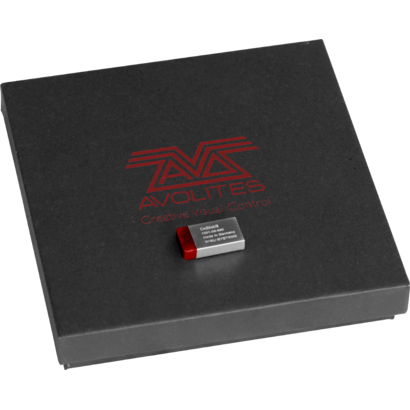
In order to update the console to version 12 of the Titan, it will be necessary to purchase and install a USB dongle called AVOKEY.
Serial 02006 - 03065
You need to order:
- AVOKEYINT 
- 1x5 way to USB-A Cable (spare part code 8000-6102)
Once you've received your AVOKEYINT and 1x5 way to USB-A Cable, you will be required to connect the USB-A Cable to the motherboard. This cable will provide an additional USB port for the AvoKey.
Click here to view the installation guide: https://www.avolites.com/Portals/0/Downloads/Manuals/AvoKey/8000-6102 TT2-2-3K AVOKEY upgrade with 1808-0028.pdf
 
Serial 03066 - 4020

You need to order only AVOKEYINT
Once you've received your AVOKEYINT, you will be required to connect this directly to the available (Blue) USB port inside the console (on the motherboard).
Click here to view the installation guide: https://www.avolites.com/Portals/0/Downloads/Manuals/AvoKey/8000-6101 TT2 AVOKEY no cable.pdf
 
Serial 04021 - 05001
You need to order only AVOKEYINT
Once you've received your AVOKEYINT, you will be required to connect this directly to the available (Red) USB port inside the console (on the motherboard).
 
Serial 5001 and above include a factory fitted AvoKey.
Therefore, you do not need to purchase an AvoKey.

Main features:

  • 10 pageable playbacks, 60 pages.
  • 10 static playbacks - perfect for instant access.
  • 100% brighter 15.6" screen.
  • Three metal shaft optical encoders offering luxurious precision.
  • MIDI support for MIDI Notes and MIDI Timecode.
  • Built in UPS.
  • 4 physical DMX outputs, up to 16 over ArtNet or sACN - 8192 channels.
  • Supports Titan Network Processors for DMX expansion up to 64 universes.
  • Trigger inputs.
  • Dual Ethernet port.
  • Expand your control surface through wings, DMX In or MIDI.
  • Dedicated cue stack control.
  • Support for external touch screen.
  • 10 programmable executor buttons.
  • Conveniently accessible front loading USB.
  • Dimensions (WxHxP): 675x435x147 mm (console only); 750x620x300 mm (console in flight case).
  • Weight: 15.2 kg (console only); 29.40 kg (console in flight case); 31.70 kg (console packed in flight case).
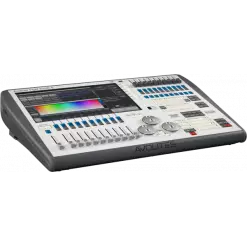
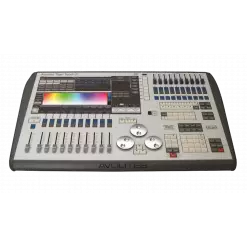
PHOTO GALLERY

Technical specifications

Versions

Accessories & Related Products

AVOKEYINT
AVOKEYINT
(Optional)
AvoKey internal (red)
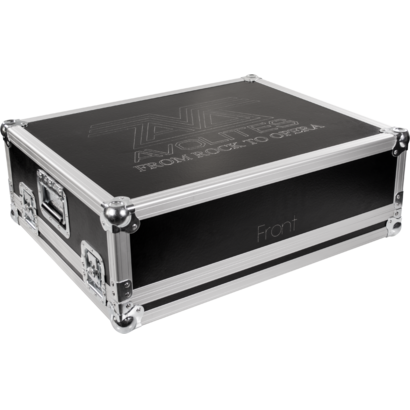
AVOTT2FC
AVOTT2FC
(Optional)
Avolites TigerTouch II Case

Hot Stepmom Xxx Boobs Show Compilation Desi Hu Install Link

Blended Family Dynamics in Modern Cinema The traditional nuclear family is no longer the sole blueprint for domestic life in modern society. As real-world demographics have shifted toward stepfamilies, co-parenting networks, and adoption, cinema has evolved to mirror these complex social structures. Modern filmmakers are moving away from the reductive tropes of the past—such as the "evil stepmother" or the permanently fractured home—to explore the nuanced, chaotic, and deeply rewarding realities of the blended family. The Evolution of the Cinematic Stepfamily

The shift away from these caricatures began slowly. The 1990s marked a turning point, as sociological approaches to analyzing Hollywood family films began to question the dominance of the nuclear paradigm. Scholarly works examining representations of the father protagonist and the broader sociocultural discourse around family structures started challenging long-held assumptions. What emerged in the 2000s and 2010s was a gradual but undeniable move toward more authentic, varied portrayals of what families actually look like.

Bringing together children from different backgrounds introduces a volatile chemistry to the household. Modern cinema captures the dual nature of these relationships. hot stepmom xxx boobs show compilation desi hu install

For decades, Hollywood offered audiences a comforting, predictable vision of family. The nuclear unit—two married parents and their biological children—reigned supreme as the cultural ideal. But the real world changed, and over the past thirty years, cinema has increasingly reflected that evolution. With approximately 40 percent of U.S. families now identifying as stepfamilies, blended families are no longer the cinematic exception but a growing reality both on and off screen. The representation of these structures in film has moved from marginal curiosity to central storytelling, and in doing so, cinema has become a powerful cultural mirror—and sometimes a catalyst—for how we understand love, belonging, and the reconfiguration of kinship in the twenty-first century.

Looking ahead, several trends are emerging that will define the next decade of films about blended families. Blended Family Dynamics in Modern Cinema The traditional

The sudden shift from a childless couple to fostering/adopting three siblings. Movie Review Mom Modern Family (2009–2020)

One of the most significant shifts in modern cinematic storytelling is the humanization of the stepparent. For generations, fairy tales and early cinema relied on the "evil stepmother" archetype to create conflict. Modern filmmakers have actively dismantled this trope, replacing it with characters who are deeply well-intentioned but structurally disadvantaged. The Evolution of the Cinematic Stepfamily The shift

Today, cinema reflects a more complex reality. As societal structures shift, modern filmmakers use the blended family matrix to explore deep themes of identity, grief, territoriality, and chosen love. No longer reduced to punchlines or villains, the step-parent, the step-sibling, and the ex-spouse are now afforded full humanity. Modern cinema treats the construction of a blended family not as a seamless transition, but as a messy, beautiful, and ongoing negotiation. The Shift from Archetype to Realism

, such as step-sibling relationships or same-sex co-parenting. Share public link

Info Request

Blended Family Dynamics in Modern Cinema The traditional nuclear family is no longer the sole blueprint for domestic life in modern society. As real-world demographics have shifted toward stepfamilies, co-parenting networks, and adoption, cinema has evolved to mirror these complex social structures. Modern filmmakers are moving away from the reductive tropes of the past—such as the "evil stepmother" or the permanently fractured home—to explore the nuanced, chaotic, and deeply rewarding realities of the blended family. The Evolution of the Cinematic Stepfamily

The shift away from these caricatures began slowly. The 1990s marked a turning point, as sociological approaches to analyzing Hollywood family films began to question the dominance of the nuclear paradigm. Scholarly works examining representations of the father protagonist and the broader sociocultural discourse around family structures started challenging long-held assumptions. What emerged in the 2000s and 2010s was a gradual but undeniable move toward more authentic, varied portrayals of what families actually look like.

Bringing together children from different backgrounds introduces a volatile chemistry to the household. Modern cinema captures the dual nature of these relationships.

For decades, Hollywood offered audiences a comforting, predictable vision of family. The nuclear unit—two married parents and their biological children—reigned supreme as the cultural ideal. But the real world changed, and over the past thirty years, cinema has increasingly reflected that evolution. With approximately 40 percent of U.S. families now identifying as stepfamilies, blended families are no longer the cinematic exception but a growing reality both on and off screen. The representation of these structures in film has moved from marginal curiosity to central storytelling, and in doing so, cinema has become a powerful cultural mirror—and sometimes a catalyst—for how we understand love, belonging, and the reconfiguration of kinship in the twenty-first century.

Looking ahead, several trends are emerging that will define the next decade of films about blended families.

The sudden shift from a childless couple to fostering/adopting three siblings. Movie Review Mom Modern Family (2009–2020)

One of the most significant shifts in modern cinematic storytelling is the humanization of the stepparent. For generations, fairy tales and early cinema relied on the "evil stepmother" archetype to create conflict. Modern filmmakers have actively dismantled this trope, replacing it with characters who are deeply well-intentioned but structurally disadvantaged.

Today, cinema reflects a more complex reality. As societal structures shift, modern filmmakers use the blended family matrix to explore deep themes of identity, grief, territoriality, and chosen love. No longer reduced to punchlines or villains, the step-parent, the step-sibling, and the ex-spouse are now afforded full humanity. Modern cinema treats the construction of a blended family not as a seamless transition, but as a messy, beautiful, and ongoing negotiation. The Shift from Archetype to Realism

, such as step-sibling relationships or same-sex co-parenting. Share public link


Subscribe to our Newsletter

Loading...