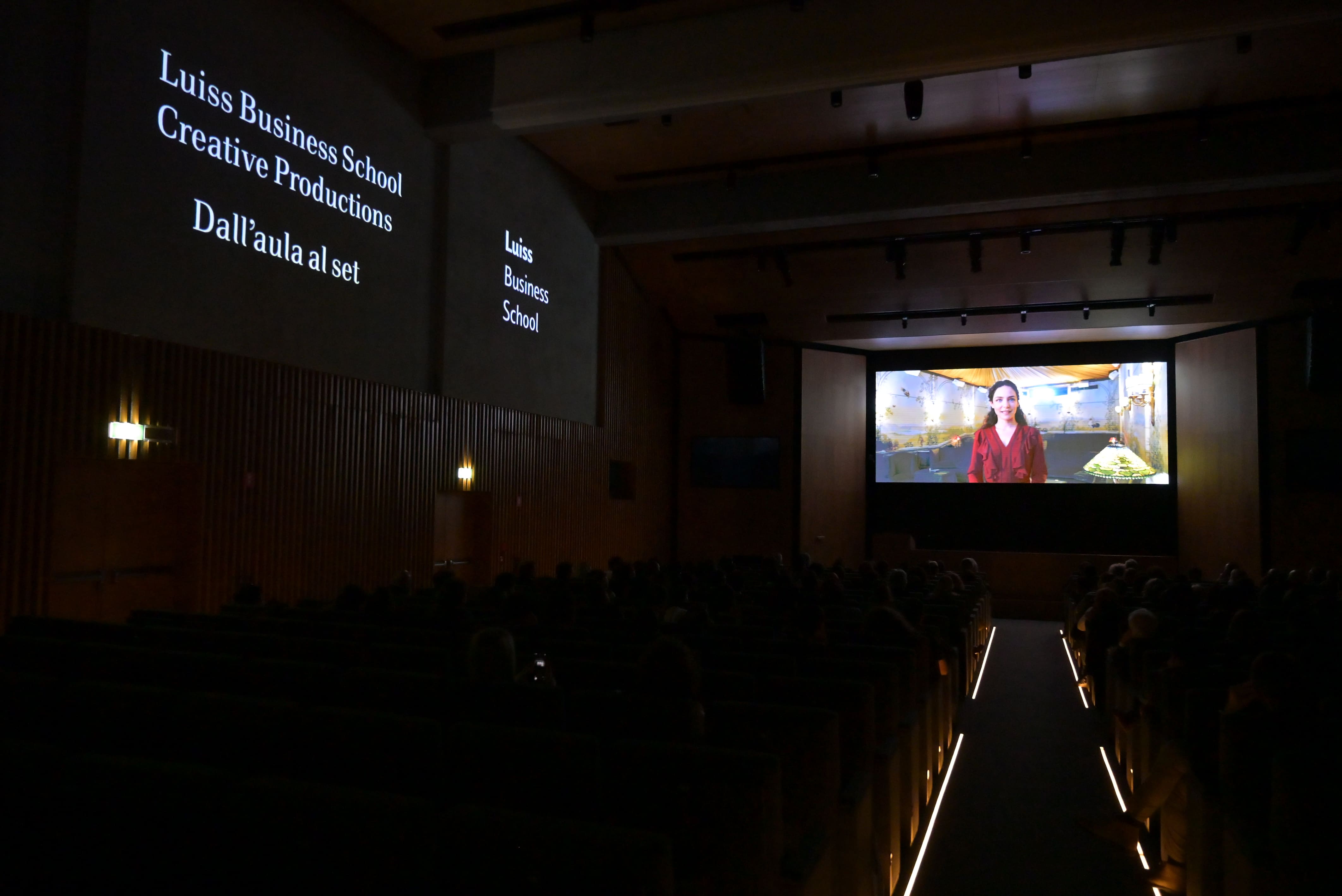
Formazione avanzata per gestire e valorizzare produzioni cinematografiche,
televisive e audiovisive, coniugando creatività e competenze manageriali
Al termine del Master, gli studenti presentano i propri concept per il pilot di una serie TV. Il progetto selezionato viene poi realizzato dagli allievi, in tutte le fasi editoriali, produttive e di post-produzione, con la supervisione di professionisti del settore e con il supporto
di una giuria di esperti che guida e valorizza lo sviluppo creativo.
Con un placement rate del 100%, una faculty di caratura internazionale e la solidità di un network di partnership aziendali, la formazione full-time Luiss Business School ha l’obiettivo di trasmettere competenze avanzate e immediatamente applicabili, agevolando l’upskilling e accelerando la crescita professionale e personale di giovani professionisti e neolaureati.
Scrivici per prenotare una sessione di orientamento
e scopri il percorso più adatto alle tue ambizioni!
© Luiss Business School Spa “a socio unico” n. iscr. Registro Imprese Roma / p.iva /c.f. 16656061005, capitale sociale i.v. 30.000.000,00 euro.
Villa Blanc, Via Nomentana, 216 - 00162 Roma | Tel. +39 06 85 22 51 | Email: luissbs@luissbusinessschool.it | Informativa sul trattamento dei dati di navigazione | Cookie policy
To understand the lifestyle, one must walk through a typical day in a traditional Indian household, where the day begins and ends with food.
North Indian cuisine is heavily influenced by its cold winters and historical Persian and Mughal interactions. Wheat is the staple grain, consumed as various flatbreads like roti , naan , and paratha . The region is famous for its rich, creamy gravies made from tomatoes, onions, cashews, and dairy products like ghee, cream, and paneer. Iconic dishes include Butter Chicken , Dal Makhani , and Chole Bhature . South India: Rice, Coconut, and Tangy Spices
Who is the (e.g., tourists, culinary students, health enthusiasts)?
Pure, fresh, and seasonal foods (fruits, vegetables, grains) that promote clarity and calmness. hot desi aunty videos exclusive
Maritime, backwater-centric, coconut-laden. Cooking Tradition: The Sadya (feast) served on a banana leaf. Steaming (in banana leaves) is preferred over frying. Coconut oil, curry leaves, and mustard seeds are the trinity. Fermented rice cakes ( Appam ) with a lacy edge are paired with Ishtu (stew).
: Many popular Desi models and "aunties" promote their accounts on Twitter (X) or Instagram. Search hashtags like #DesiOnlyFans or #SouthAsianCreators . 2. Fansly
Consequently, Indian cooking is not just about taste (Rasa), but about potency (Virya) and post-digestive effect (Vipaka). A traditional meal is a deliberate balancing act. For example: To understand the lifestyle, one must walk through
: Cooking extra food for unexpected guests is standard practice. Essential Kitchen Tools
India's geography dictates its plate. While common spices like turmeric and cumin are ubiquitous, the primary staples shift dramatically across the country.
In South Asian cultures, the term "aunty" (or "aunti" in some regions) carries significant cultural connotations. It is a term of respect used to address older women, often those who are married or perceived as authoritative figures. The notion of "aunty" is closely tied to traditional values, family structures, and social hierarchies. The region is famous for its rich, creamy
Westerners often ask for "Curry." In India, no such dish exists. The Indian lifestyle is fighting back against homogenization. Young chefs are retrieving "lost recipes"—foods from the Parsi community, the Nizam's kitchens, and tribal forest foods.
The Indian lifestyle is a beautiful tapestry woven from thousands of years of history, diverse geography, and deeply rooted spiritual traditions. At the absolute center of this lifestyle sits its cuisine. In India, cooking is never just about preparing food; it is a sacred ritual, an expression of love, and a cornerstone of daily family life. 1. The Philosophy of Food: Beyond Sustenance
To grasp Indian cooking, one must first look at , the traditional system of medicine. Unlike Western nutrition, which focuses on calories, fats, and proteins, Ayurveda classifies food by its Rasa (taste) and its Virya (heating or cooling energy).