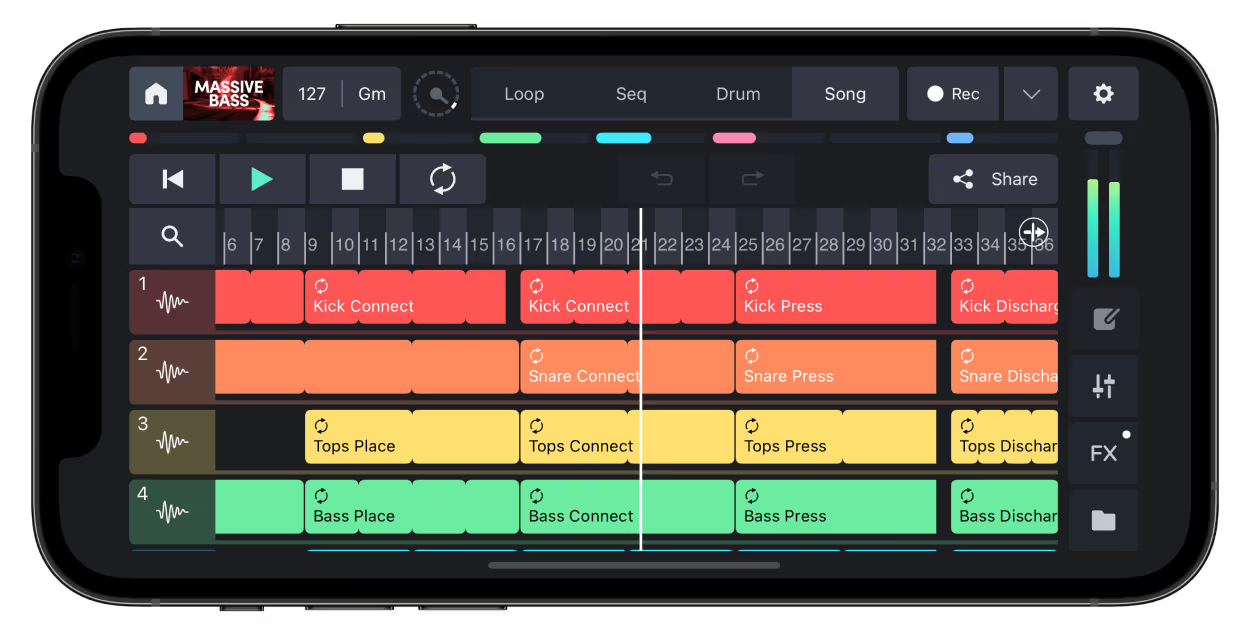

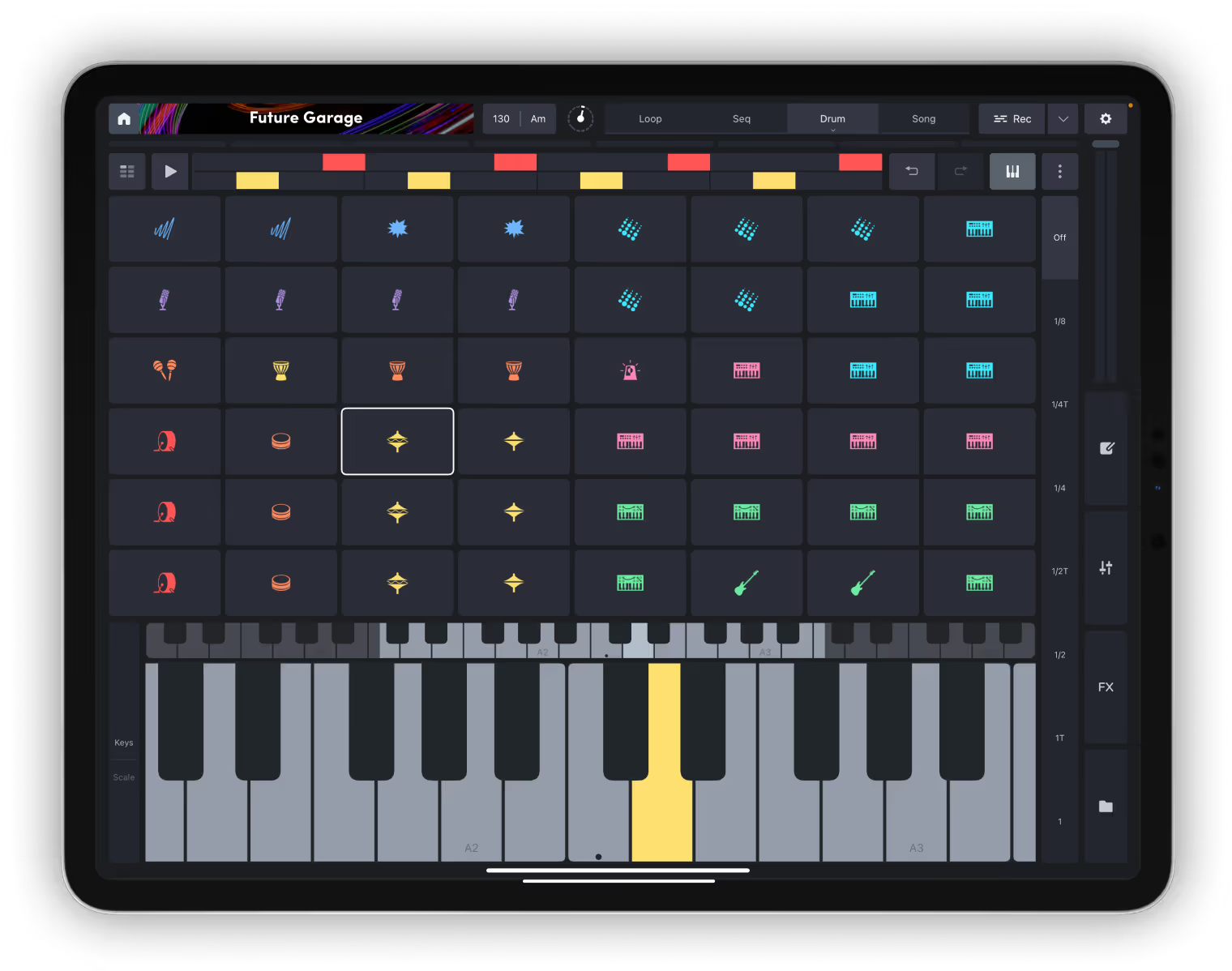
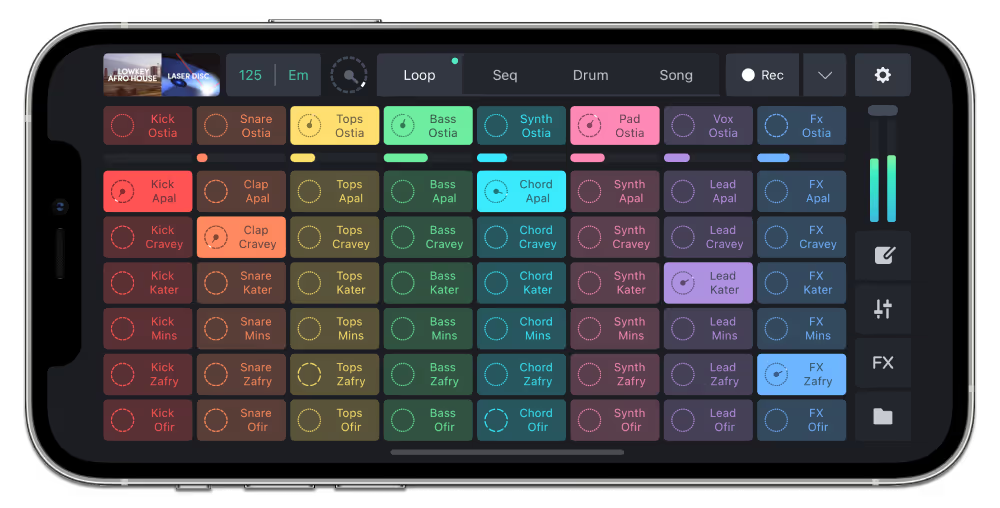
On iOS, MacOS & Android




Produce and perform live music
with no interruptions


If you are working on a specific design or trying to interpret an old blueprint, let me know or tolerance code (like H7, m6, etc.) you are trying to find. I can help you look up or calculate the exact upper and lower deviations you need for your project. Share public link
subgraph Current [Current Standards (In Force)] D[DIN EN ISO 286-2:2019<br>ISO Code System for Tolerances, Part 2] E[DIN EN ISO 286-1:2019<br>ISO Code System for Tolerances, Part 1] F[DIN ISO 2768-1<br>General Tolerances for Linear Dimensions] end
However, the "DIN 7161 PDF" remains a sought-after document for: Legacy Maintenance
In a clearance fit, the shaft is always smaller than the hole. This ensures that the components can move or rotate relative to one another. din 7161 pdf
: Specific numerical values (in micrometers or μm) for the upper and lower limits of a hole’s diameter. Nominal Ranges
DIN 7161 was never an isolated document. It was part of a larger, interconnected "DIN family" of standards from the 1960s. Understanding these related standards helps to provide context:
The standard applies to the following dimensions that are not individually toleranced: If you are working on a specific design
Because DIN 7161 was the precursor to ISO 2768-1, the values are largely identical. However, modern drawings should utilize .
I can help look up the exact mathematical limits or guide you on the for your design. Share public link
You can often find visual summaries of these tables, such as the ISO-DIN 7160/7161 Tolerance Tables available online. Difference Between DIN 7160 and DIN 7161 This ensures that the components can move or
DIN 7161 was published in August 1965. It is important to note that it has been superseded by DIN ISO 286-2:1990-11 , which is the current, modernized standard for limits and fits.
Specifically, DIN 7161 focuses on and the fundamental tolerances required for shafts and holes to achieve specific types of mechanical fits (clearance, transition, and interference fits).
Most modern German engineering documentation has transitioned to . However, because millions of blueprints, legacy machines, and industrial tools were created under the older DIN system, cross-referencing DIN 7161 charts remains a day-to-day necessity in many machine shops worldwide. Why Engineers Look for the DIN 7161 PDF
(holes) for sizes ranging from 1mm up to 500mm. Before this, if a factory in Munich made a shaft and a factory in Hamburg made a hole, there was no guarantee they would fit together. DIN 7161 provided the mathematical tolerance tables—expressed in micrometers ( )—to ensure perfect compatibility. The Technical Heart
Enhance your set with high quality DJ and production FX

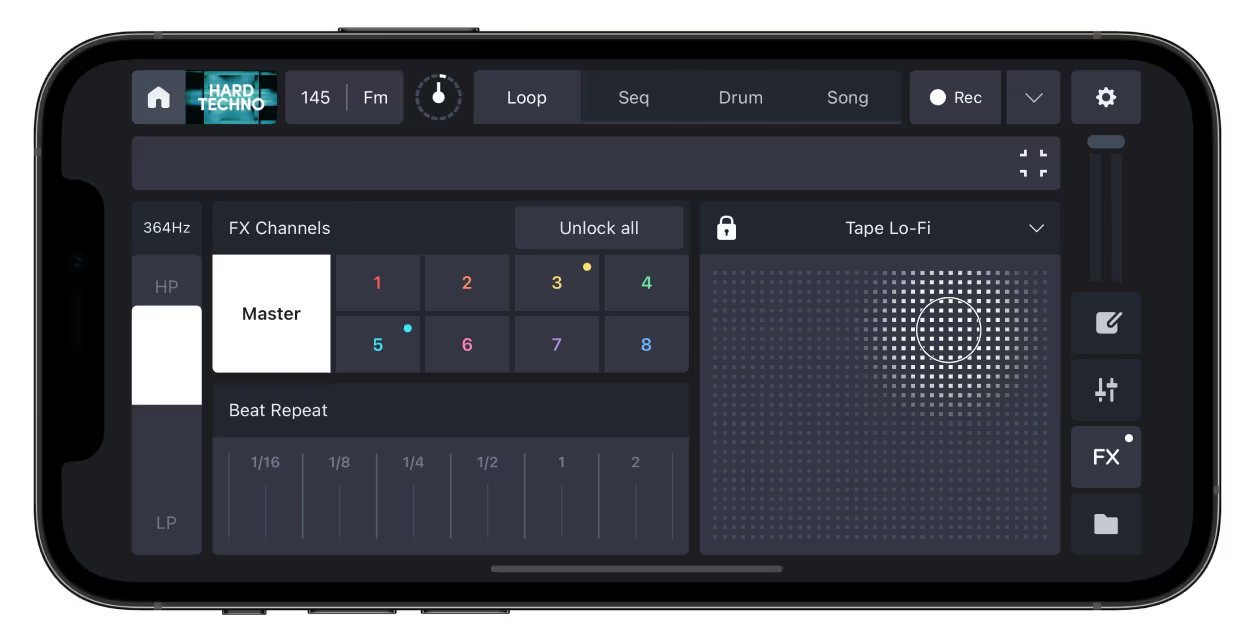
Switch projects without ever loosing sound
Automatic BPM sync and key matching
Connect your devices with Ableton Link
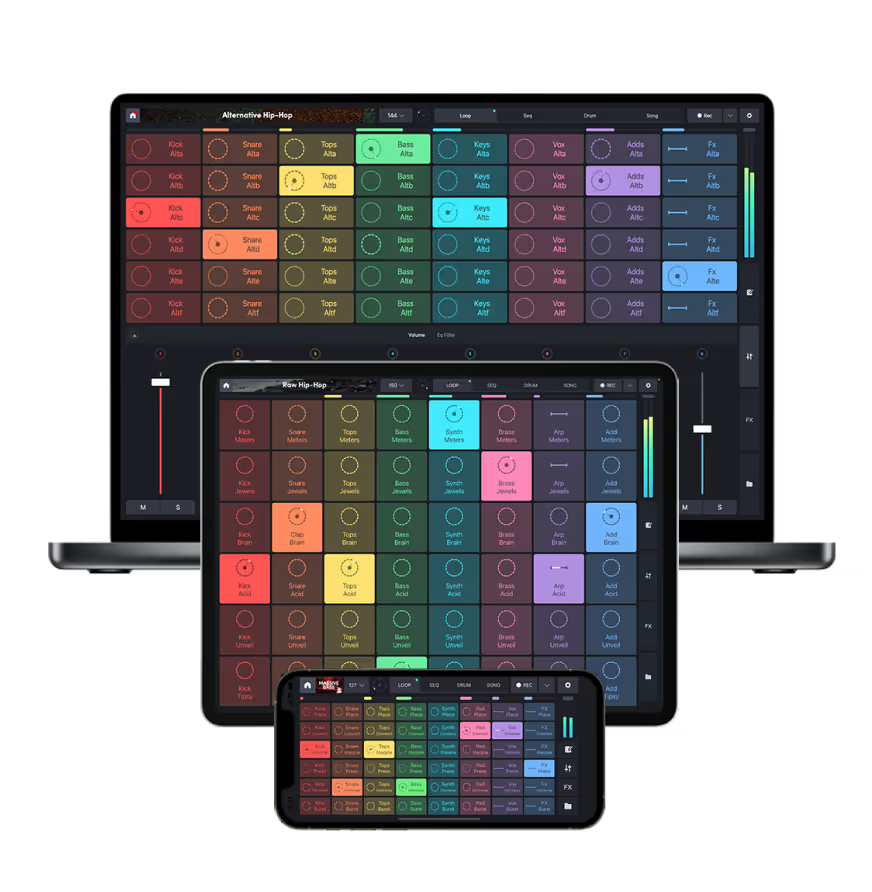
Available on all your devices